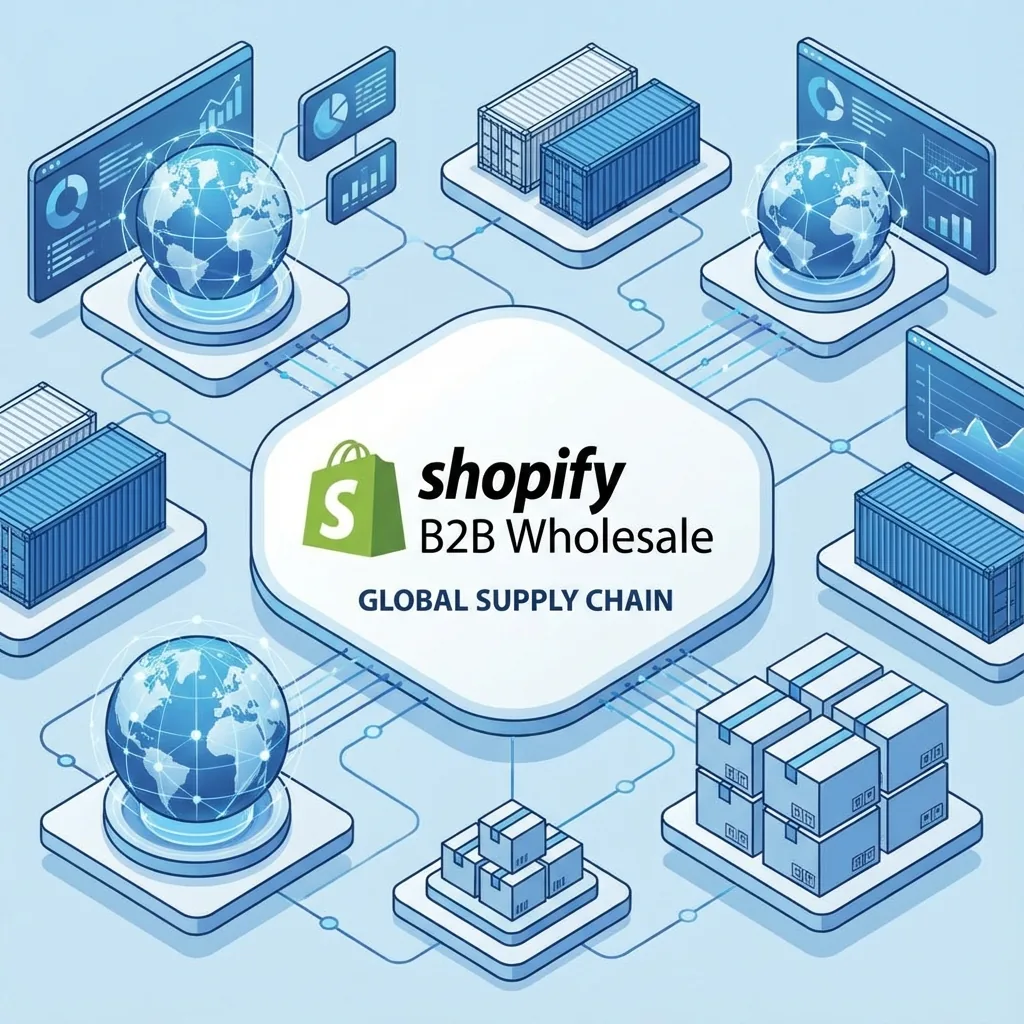
Shopify B2B for Wholesale in 2026: Markets, Catalogs, and Operational Reality
For years, "Shopify is only for small businesses" was the common refrain. In 2026, that myth is gone. Shopify B2B has matured into a serious wholesale operating layer, especially for brands that want to run DTC and B2B from the same product and customer system.
Why the sudden shift? It comes down to one thing: Unified Commerce. Managing your DTC (Direct-to-Consumer) and B2B channels from a single admin panel is a game-changer for operational efficiency.
Table of Contents
Chapter 1: The Unified Admin Experience
The old way of doing B2B involved setting up a completely separate subdomain (e.g., wholesale.brand.com) with a duplicate inventory system. This was a nightmare for stock syncing.
In 2025, Shopify B2B runs off the same product database. You toggle a setting on a product to make it available to "DTC," "B2B," or "Both." Inventory is deducted from the same warehouse in real-time, preventing overselling.
Chapter 2: Critical B2B Features (Catalogs & Pricing)
Shopify now supports complex pricing structures natively, without clunky apps.
Custom Price Lists (Catalogs)
You can assign specific "Catalogs" to specific companies.
- Company A (Gold Tier): Gets 40% off retail price across the board.
- Company B (Silver Tier): Gets 20% off only on the "Accessories" collection.
Quantity Breaks
Native volume pricing is built-in. "Buy 10 for $50 each, Buy 50 for $45 each." This is displayed clearly on the product page (PDP) for logged-in B2B customers.
Chapter 3: The New B2B Checkout
The friction of B2B buying has been removed. The new checkout experience mirrors the seamless consumer experience but adds enterprise necessities:
- Vaulted Credit Cards: Wholesalers can save a card on file for quick re-ordering.
- Net Terms: Assign Net 15, 30, or 60 terms to trusted partners. They checkout now, and Shopify tracks the "Payment Pending" status automatically.
- PO Numbers: A mandatory field for purchase order numbers ensures your buyers can reconcile their own accounting.
Chapter 4: Using "Company Profiles"
The "Customer" data model has been upgraded to "Company" profiles. A Company can have multiple "Locations" and multiple "Contacts."
Example: A chain of coffee shops (The Company) has 10 locations. The Manager at Location A can order supplies shipped to Location A, billed to the Headquarters. The Regional Director can see all orders from all 10 locations. This hierarchy is now native to Shopify.
What Changed for B2B Going into 2026
The big shift is that Shopify B2B is no longer a narrow "Plus-only wholesale add-on" story. Shopify now documents B2B features across plans, while also making it clear that plan limits still matter.
- B2B on all plans: Core B2B capabilities are broader than they were a year ago, but limits differ by plan.
- Catalog limits matter: On Basic, Grow, and Advanced, you can assign up to 3 active catalogs across B2B markets. On Plus, the catalog model is much more flexible.
- Markets matters more: Wholesale segmentation is increasingly tied to Markets, especially for blended stores with region-specific pricing and product availability.
Blended Store vs Separate B2B Store
A blended store is attractive because it centralizes products, inventory, and reporting. But it is not the right choice in every case.
- Use a blended store when your B2B and DTC catalogs overlap significantly and your team values shared operations.
- Use a separate B2B expansion store when wholesale needs a radically different product mix, pricing logic, or gated experience.
- Review agentic and discovery exposure if you run mixed catalogs, because D2C-facing discovery channels and B2B-only visibility rules need to stay intentional.
How I Structure a Practical B2B Rollout
- Define company and location hierarchy before touching theme work.
- Map catalogs and payment terms around actual buyer groups, not around internal departments.
- Decide whether Markets should own segmentation or whether direct company-location assignment is enough.
- Validate customer-account flows for reordering, PO numbers, approvals, and payment collection.
- Test blended-store edge cases including pricing visibility, product access, taxes, and shipping rules.
Official References
- Shopify Help Center: overview of B2B features on Shopify
- Shopify Help Center: B2B and Markets
- Shopify Help Center: creating and managing B2B catalogs with Markets
- Shopify Help Center: Shopify Plus feature test drives
- Related reading: Shopify Markets vs multistore architecture
Conclusion: It's Time to Migrate
If you are paying $50,000+ a year for a legacy B2B platform that requires a team of developers to update a banner image, you are bleeding money. Shopify B2B offers 90% of the custom functionality at 10% of the headache.
Planning a B2B Migration?
I have successfully migrated multiple enterprise wholesalers to Shopify Plus. Let's discuss your data structure.
Discuss Your B2B Strategy